

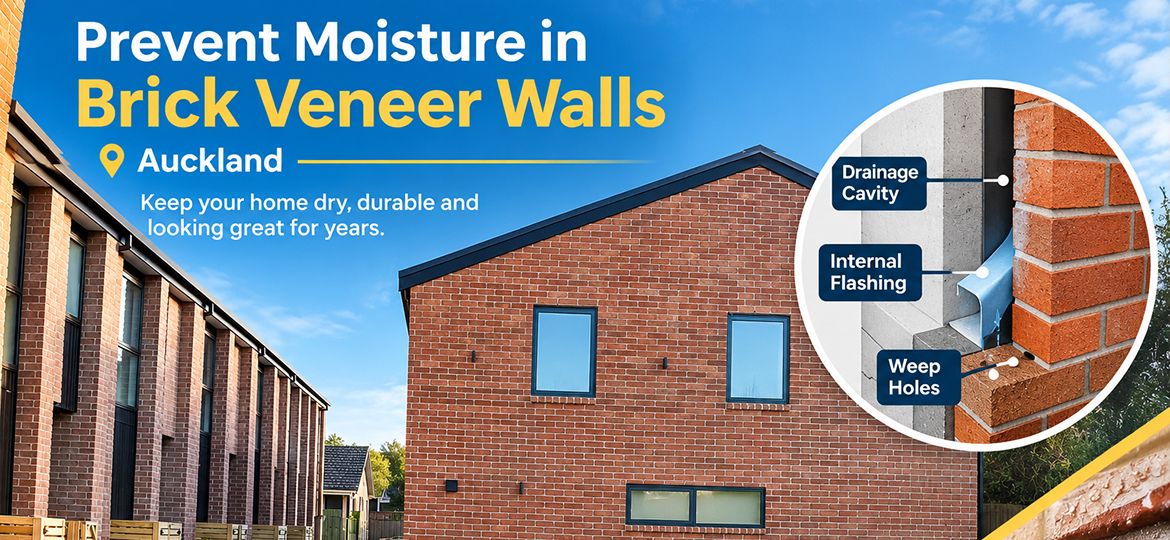
Your home should be a sanctuary. A place of comfort, security and peace of mind. The brickwork of your home adds beauty and character, but even the strongest of brick walls need protection. Moisture affects the structure and finishes of your home and leads to decay of building materials, mold, bad smells and unwanted stains. Neglect of these problems can lead to costly repairs.
Knowing how to prevent moisture in brick veneer walls Auckland is essential for homeowners and builders. The weather in Auckland is always changing and the wind driven rain can be very troublesome. Proper flashing, cavity drainage and weatherproofing are important to protect your home.
It is essential to follow appropriate building practices, and to repair and seal your brickwork on a regular basis, in order to protect your home from moisture damage. If you prevent moisture in brick veneer walls Auckland, you are also protecting the structure of your home and giving yourself peace of mind. Early prevention helps keep your home dry, durable and looking its best for years to come.
Why Moisture Prevention Matters for Brick Veneer Homes
Brick veneer construction is a popular way to give homes an attractive façade; however, it requires more than quality bricks to ensure the finished wall performs adequately. Behind the finished wall, a system needs to be in place to ensure that moisture is effectively managed and enables drying. If moisture is allowed to repeatedly penetrate sections that should remain dry, potential problems can occur in the framing and insulation, and affect the wall underlay and the finishes in adjacent spaces. If the water is allowed to remain in these hidden areas, it can lead to costly problems.
Prevent moisture in brick veneer walls Auckland by understanding how the complete wall system works. In systems with brick veneer, the outer brick skin protects against weather; the space between allows for drainage of moisture; weep holes allow for trapped moisture to escape; and flashings direct water away from openings and joints. Maintaining these prevents moisture in brick veneer walls Auckland helps to protect the substrate behind the brickwork, and to keep your walls in good condition.
Good construction practices include the use of details that incorporate moisture management systems. It also enables the continuation of systems to protect the building. Rather than allowing water to penetrate the finishes and wait for damp patches to appear, it is good practice to pay attention to the details that keep moisture out. Attractive construction is only of benefit when it helps to control moisture.
Auckland’s Climate and Its Effect on Brickwork
Auckland’s humid, rainy and windy climate causes brick walls to collect a lot of moisture. Site orientation, site constraints, roof design and other factors can all increase a property’s exposure to the elements. Heavy rains can drive water into the brick cavity and mortar joints, especially if the flashing is missing or blocked.
To prevent moisture in brick veneer walls Auckland, proper design of the cavity, effective flashing and adequate drainage are essential . Waterproof coatings will not prevent long-term moisture build-up. Prevent moisture in brick veneer walls Auckland by site exposure during construction and use of appropriate systems.
Signs of Moisture Problems
Moisture problems are not always evident and may present in a variety of ways including a musty smell in a room, water marks or efflorescence on internal walls. Deteriorating mortar, flaking paint or peeling wallpaper may all indicate an underlying moisture problem.
Watch out for these possible signs:
- Damp stains or discoloration on the internal walls next to the external brickwork.
- Odors that are stale and that will not go away with normal cleaning and airing.
- White powdery deposits on bricks are caused by salts left behind as moisture evaporates.
- Deteriorated and/or cracked mortar joints.
- Water pooling at the base of walls or at window and door openings.
- Water staining on the interior gets worse after it rains.
These symptoms do not always mean the veneer is the issue. Roof leaks, plumbing leaks, condensation and poor ground drainage can also cause these symptoms. If a problem keeps occurring, then have the issue evaluated, before money is spent on cosmetic repairs.
Essential Ways to Prevent Moisture in Brick Veneer Walls Auckland
Preventing moisture in brick veneer walls Auckland involves looking at the complete wall system. There are multiple elements such as the bricks, cavity under the veneer, wall underlay, flashings, weep holes and drainage, all of which help to manage rainwater. If any one of these elements is missing or defective, the overall system will not work as intended.
This should be considered in the design of a new home, and checked during construction of the new home. In an existing home, a professional can evaluate whether moisture is entering through the brick veneer, a window-wall junction, a roof-wall connection, or elsewhere. Addressing the brick veneer may not be the best repair if the actual source of the moisture is not the brick veneer.
- Seal Windows, Doors and Wall Junctions
Ingress of water can occur through windows and doors, as well as roof-wall junctions. Proper flashing and seals help to divert water away from wall structures. Look for water stains, or check for cracks or other damage on seals. If, after a heavy downpour, the wall remains damp, a building professional should be engaged to assess the situation.
- Suitable Materials and Quality Workmanship
Select bricks, mortar, wall underlay, flashings and wall ties in accordance with project requirements. Quality workmanship, including finished mortar joints, reduces the risk of moisture penetration. Keep the brick cavity free of mortar droppings and debris to allow it to function as a drainage system. Continuous quality checks during construction reduce the risk of hidden defects and protect the wall from moisture issues.
- Correct Use of Flashing and Weep Holes
Weep holes in conjunction with flashing help to drain moisture from between the brick veneer and external wall. In NZ, where building codes provide that weep holes be provided in brick masonry construction, they must be provided. However, it is permissible to provide an assessment of weep holes to determine if they are blocked and to explain why weep holes are not needed. Keep weep holes open by not mortaring them shut. Flashing must be installed in accordance with the NZ building code to ensure moisture does not penetrate the wall behind the brick veneer at windows, doors and lintels.
- Cavity Drainage and Ventilation
Cavity drainage systems for Auckland brick veneer walls must be in accordance with building codes. Appropriate ventilation systems must also be in place to allow the wall to dry. Drainage and ventilation systems must be in accordance with the building plans and other NZ codes and standards. Regular inspections of the drainage and ventilation systems can identify system blockages.
Maintaining Brick Veneer Walls for Long-Term Protection
Brick veneer walls are most susceptible to moisture damage, but this can be avoided with proper maintenance. Ensure gutters and down pipes are clear and that water runs away from the foundations. Check that the weep holes are not plugged. Look at the flashing and the exposed mortar joints. Look for damp musty odors, peeling paint which indicate moisture damage and treat as needed.
Brick Wall Maintenance Checklist
Exposed brick and mortar joints: Look for signs of deterioration.
- Seal weep holes and drainage openings, as specified.
- Keep gutters and downpipes clear surface drains clear.
- Check all exposed flashings and seals.
- Ensure landscape beds do not block drainage and/or impede water against the wall.
- Look for damp and/or musty smells on internal walls.
- Get the opinion of a professional if moisture is returning and/or the source of the moisture is unclear.
Remember that a maintenance check cannot confirm the condition of concealed cavities. If you suspect that moisture is getting behind the brick veneer, a qualified professional may be needed to investigate construction details to determine the extent of the problem and potential solutions.
Don’t Let Moisture Affect Your Investment. Get Better Masonry Moisture Management NZ
Masonry moisture management NZ means more than just removing unsightly stains. Moisture management systems help protect the materials behind the brick. Good moisture management systems help keep a comfortable indoor environment and reduce the need for repair and maintenance work. A wall system should incorporate a means to drain and dry moisture. This protects the wall and building frame from excessive moisture and high levels of dampness.
During the design and construction of a new building, there are many opportunities to create an appropriate cavity wall system, to incorporate the right flashing, weep holes and wall joints, and to ensure that the cavity is adequately ventilated and remains clean. Adequate provision should be made to allow important elements to be inspected and remain visible.
Existing buildings should be monitored for signs of deterioration. Walls that become repeatedly damp should be investigated to determine the cause before visible deterioration occurs. The earlier a problem is identified the wider the choice of appropriate repairs that can be made to restore the wall.
Quality masonry work is a combination of design, construction and maintenance. By focusing on these important details, the owner of the property can ensure the continued performance of the brick veneer wall.
Conclusion
Keep Your Brick Veneer Walls Dry, Strong and Durable
If you want to know how to prevent moisture in brick veneer walls in Auckland, you can take some precautions to safeguard your investment. Check that all components are included in a brick veneer cavity system. These include flashing, drainage and well detailed and maintained construction joints and junctions. Brick veneer cavity systems, like any other building system, require regular inspection and maintenance to keep them in good condition. A brick veneer wall system can give decades of dependable service, with proper maintenance.
FAQS
1.How can I prevent moisture in brick veneer walls in Auckland
Moisture in brick veneer walls is primarily managed by a well-designed and constructed brick veneer cavity system. It consists of a combination of correct flashing, drainage, and detailed and maintained construction joints and junctions. Other moisture sources should be managed by other building systems (e.g. leaking building services). If there is persistent dampness in the building, it is advisable to seek the services of a building scientist to identify the cause of moisture.
2. Is a brick veneer totally waterproof?
No. The brick veneer looks solid, but water can get in through the mortar joints and in some places in the veneer. The cavity in the brick veneer is to let the moisture drain out of the supporting wall. Properly designed and constructed systems (drainage and construction details) are necessary for effective moisture management.
3. What are the weep holes for in a brick veneer wall?
Weep holes permit moisture to drain from the cavity behind the brick veneer. Weep holes shall be constructed and located in accordance with applicable construction details. Weep holes must be kept clear for proper operation.
4. Can waterproof paint solve damp problems on brick walls?
Not always. A coating may be effective in some situations, however, it will not address blocked cavity drainage, faulty flashing or water ingress through a building junction. There are also coatings that may obstruct the movement of moisture. Determine the cause of the dampness first before choosing a treatment.
5. When should I seek a professional’s help for water ingress through brick walls?
If you are seeing constant damp patches, musty smells, crumbling mortar, water marks on interior walls or if you notice that moisture is building up on walls and getting worse after it rains, get in a professional. A professional will help identify where the problem began and correct it. It could be the brick veneer, the roof drainage, the plumbing or something else.